
The Karma Kagyu Lineage Masters
-

TILOPA (988-1069)
The human founder of the Kagyu school is Tilopa. He meditated unceasingly in the deep jungles of India and is one of the most celebrated of the Indian mahasiddhas. Through tantric mastery, he met the Buddha in his primordial form as Vajradhara (Dorje Chang) and is known to be the first human to receive the Mahamudra teachings. As a teacher, he taught through inspired poetry as he sung about his experiences of realization. His primary disciple was Naropa.
-

NAROPA (1016-1100)
Naropa was a great scholar at the Buddhist University at Nalanda but, after being visited by a dakini who told him that he “understood the words, but not the meaning” of the Dharma, he abandoned his studies and position to search for the teacher Tilopa. While studying with great trust and devotion to Tilopa, he overcame a series of hardships which cleared obstacles on his path allowing him to attain enlightenment. Naropa is one of the renowned 84 Indian mahasiddhas and is best known for his own unique expression of wisdom, the consolidation of the completion stage teachings into what are known as the Six Yogas of Naropa.
-

MARPA (1012 - 1096)
Marpa was born in southern Tibet, traveled to India to receive teachings from the great Indian masters. Naropa became his primary teacher and gave Marpa the full transmission of the lineage, declaring Marpa to be his successor. Marpa brought the Kagyu Lineage teachings back to Tibet and spent many years translating these Buddhist scriptures. This was a major a contribution to the transmission of the complete buddhadharma to Tibet. Thus, he is often known as Marpa, the translator.
-

MILAREPA (1052 - 1135)
Milarepa was born in western Tibet to a prosperous family in the late 11th century. He is best known for sharing his teachings through his acclaimed spiritual poetry known as The Hundred Thousand Songs of Milarepa. The spiritual groundwork he laid for those who came after him illustrates some of the fundamental aspects of the Vajrayana and Mahayana traditions. The spiritual groundwork he laid for those who came after him illustrates some of the fundamental aspects of the Vajrayana and Mahayana traditions.
-
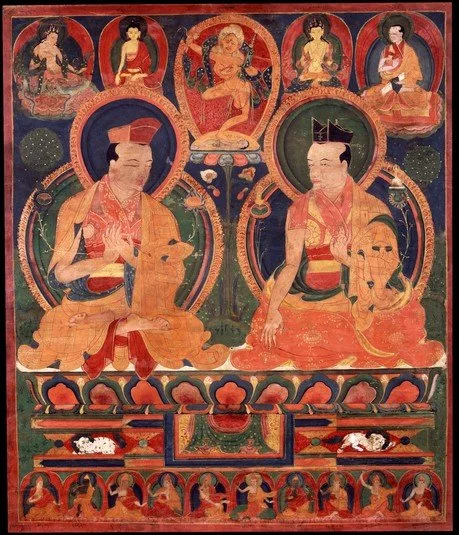
GAMPOPA 1084 - 1161
Gampopa lived in Tibet from 1084-1161. From a young age, he studied medicine and, at age 25, he set forth on the monastic path after his wife and children died in an epidemic. While ordained in the Kadam tradition he heard some beggars speak of the renowned master Milarepa, and profound devotion arose in his heart. He sought out Milarepa and became one of his primary students. After many years in meditation retreat, he brought together the tantric teachings and practices of Indian Mahasiddhas with the those of the Kadam monastic tradition. He also brought together the Kadam Lamrim teachings (Stages of the Path to Enlightenment) and the Mahamudra teachings that he received from Milarepa. He founded the Kagyu tradition and wrote the Kagyu version of the Lamrim, Jewel Ornament of Liberation.