Chötrül Düchen 2026: The Great Occasion of Miraculous Dharma Display
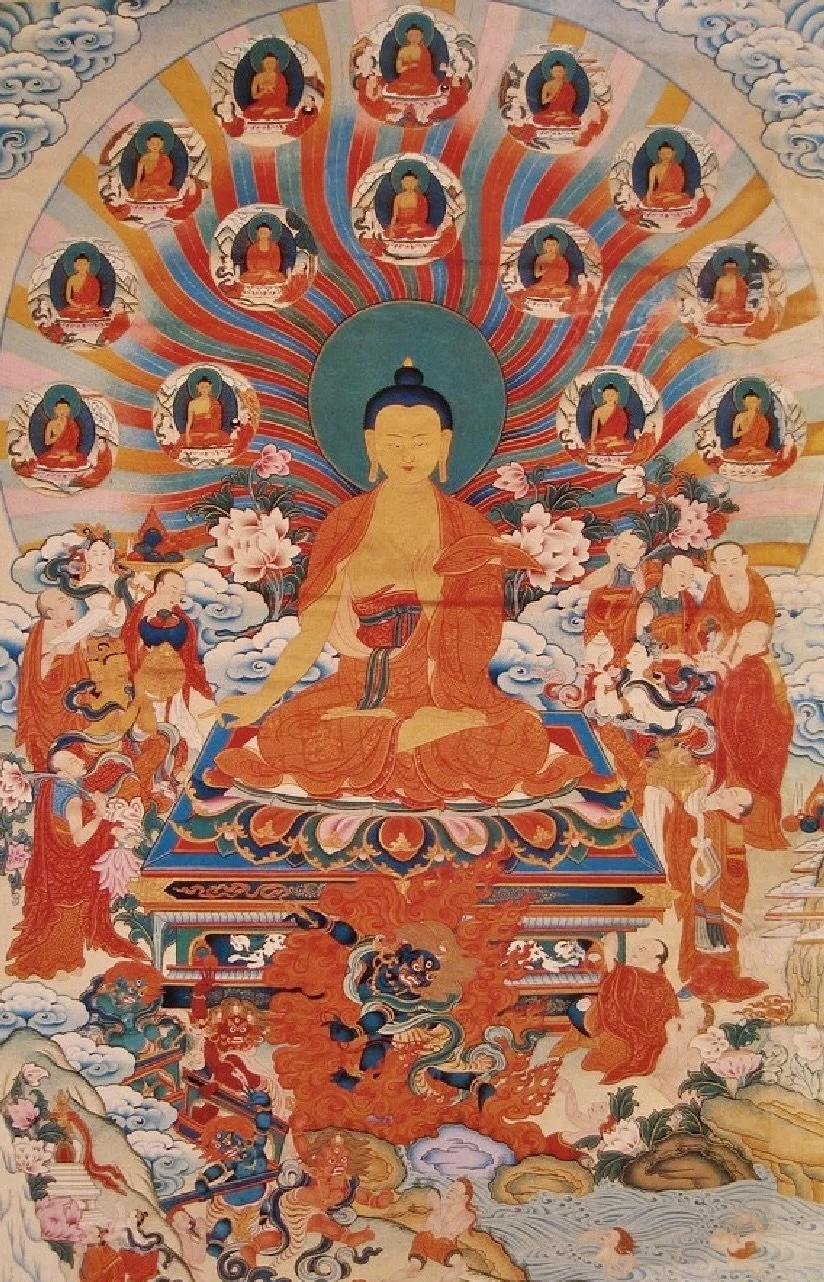
On Wednesday, March 3rd, the fifteenth day of the first lunar month, we observe Chötrül Düchen, one of the four great Buddhist holy days commemorating pivotal events in the life of the Buddha. The name itself offers guidance. Chötrül (chos ’phrul) combines chos, meaning Dharma, with ’phrul, meaning miracle or wondrous display. Düchen (dus chen) means great occasion. Chötrül Düchen is therefore the Great Occasion of Miraculous Dharma Display.
According to traditional accounts, six rival teachers challenged the Buddha to demonstrate miraculous powers in order to undermine his influence. Rather than respond from pride or defensiveness, the Buddha accepted out of compassion. Over the fifteen days following Losar, he manifested extraordinary displays, multiplying his form, radiating light, walking through the sky, emanating offerings. On the fifteenth day, the display culminated in such a way that many who had doubted him took refuge and entered the path. For this reason, the day is considered exceptionally auspicious, and the effects of actions, both virtuous and non-virtuous, are said to be multiplied many millions of times.
Yet the story is not ultimately about spectacle. It is about skillful means. The Buddha’s miracles were not performed to defeat opponents but to loosen fixation—to interrupt rigid certainty and open the possibility of seeing differently.
This feels especially relevant now. We are living in a time of deep entrenchment. Wars expand. Corruption and moral depravity are exposed, yet accountability often feels partial or absent. Institutional force impacts vulnerable communities. Public discourse erodes into distortion and calculated falsehood. Trust thins. Fear circulates. Anger hardens. When systems feel unstable, the mind instinctively tightens. We habitually double down on views, divide the world into righteous and irredeemable, and seek certainty in narratives that confirm what we already believe.
This tightening can feel protective. It is also exhausting.
Perhaps the miraculous display remembered on Chötrül Düchen invites us to loosen our fixation on outrage, aggression, despair, or moral superiority as the only responses available to us. This does not mean disengagement. It means widening the field. The Buddha’s display revealed possibilities beyond the binary logic of winning and losing. It pointed to a dimension of mind not captured by fear.

From a Mahayana perspective, the deepest miracle is bodhicitta: the steady orientation toward awakening for the benefit of beings, even in the midst of confusion and harm. Bodhicitta does not wait for ideal circumstances. It arises precisely because suffering is present. In times when cruelty, deception, and violence appear amplified, the commitment to remain oriented toward the welfare of all beings—including those whose actions we struggle to understand—becomes quietly radical. It asks something profound of us: to engage this world with a spacious and compassionate heart rather than collapse into reactivity.
From a Vajrayana perspective, miraculous display points to something even subtler. Appearances themselves are dynamic and fluid; they are luminous display rather than fixed essence. What seems solid and immovable is not ultimately self-existing. When this is glimpsed, even briefly, the mind becomes less easily captured by panic or hatred. Reactivity can transmute into clarity. The true miracle is not control over external events, but the capacity to meet them with discernment and compassion.
Only from this understanding does the teaching about the multiplication of karma fully land. Chötrül Düchen is said to magnify the effects of the actions of body, speech, and mind many millions of times. Whether understood cosmologically or psychologically, the message is clear: intention matters. In a culture where misinformation spreads rapidly, honesty matters. In a climate of aggression, conscious engagement matters. In environments of dehumanization, remembering shared vulnerability matters. Small gestures of clarity accumulate. So do small gestures of harm.
How to Observe Chötrül Düchen
Practices on this day are not about performance, but alignment.

Make Offerings
Light offerings, flowers, incense, or water bowls—gestures that symbolize illuminating obscuration and cultivating wisdom.
Recite and Reflect
The Sutra of the Three Heaps, the Heart Sutra, the Mani mantra (Om Mani Padme Hum), or the Vajrasattva mantra. Speech aligned with purification and compassion steadies the mind.
Deepen Meditation
Stabilize attention through shamatha.
Investigate experience through vipashyana.
Rest in Mahamudra.
If trained in Vajrayana, engage yidam practice or tsok/Ganachakra, remembering that enlightened display is not separate from appearance itself.
Practice Ethical Care
Be especially attentive to speech. Notice the impulse to exaggerate, repeat unverified claims, or sharpen language unnecessarily. Refraining can itself be a profound offering.
Engage Generosity
Support your Dharma center and teachers.
Offer material help.
Offer listening presence.
Offer steadiness.
Make Aspirations

May my mind not contribute to confusion.
May my speech not inflame division.
May my actions reduce harm.
May wisdom and compassion deepen in this very world.
Chötrül Düchen is not merely a remembrance of ancient miracles. It is an invitation to participate in the miracle of engaging this world with a spacious, discerning, and compassionate heart that does not harden, even when circumstances provoke fear, anger, or confusion. In a time when fragmentation feels pervasive, the cultivation of bodhicitta becomes an act of profound courage. To orient body, speech, and mind toward awakening for the benefit of all beings without waiting for conditions to improve is itself a transformative display.
On this Great Occasion of Miraculous Dharma Display, may we renew that commitment. May clarity arise where there is distortion. May courage arise where there is fear. May compassion arise where there is harm. And may the steady miracle of an open heart quietly shape the world we share.