Chökhor Düchen 2026: Celebrating the Buddha’s First Turning of the Wheel
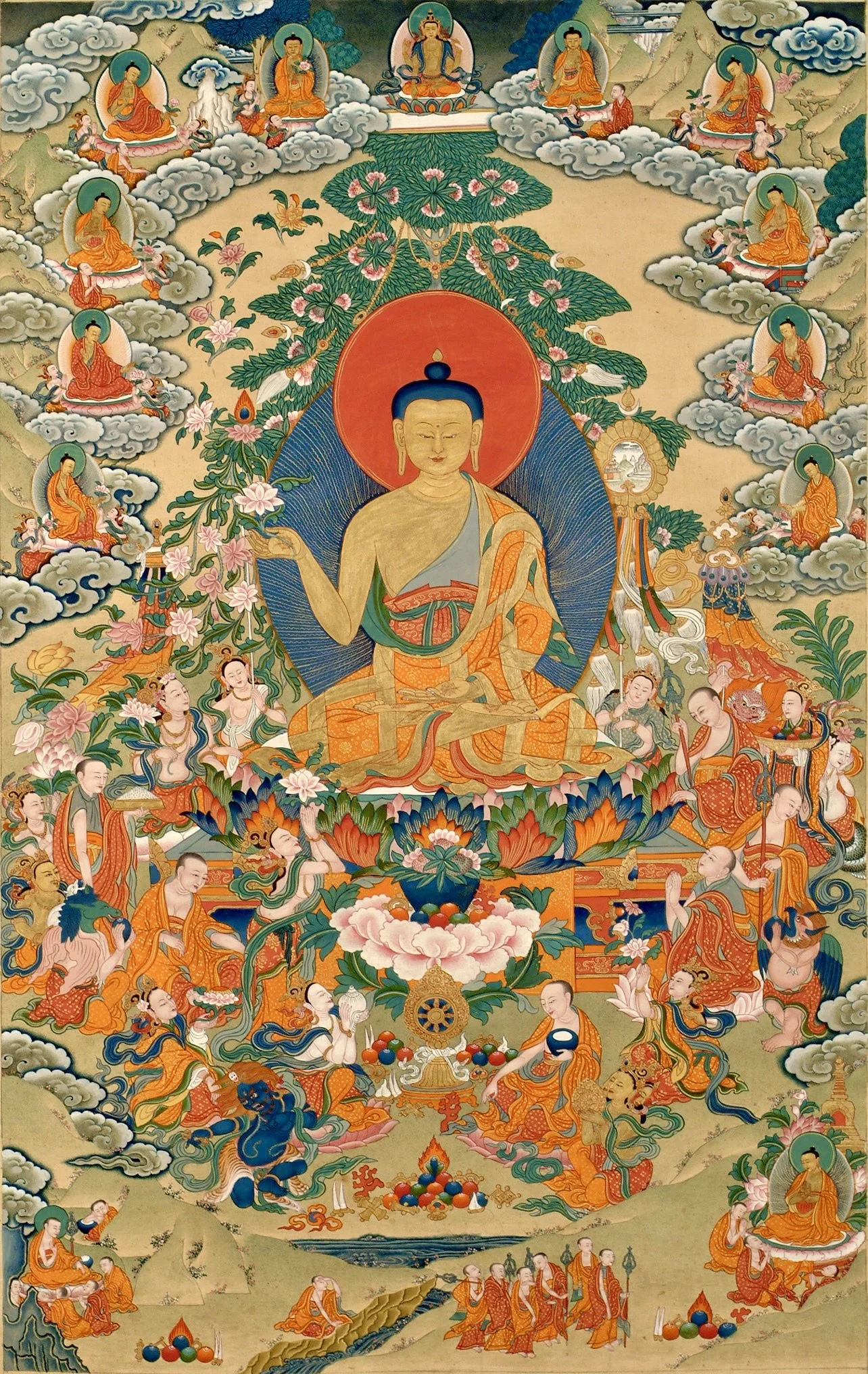
On Saturday, July 18th, we celebrate Chökhor Düchen, one of the four great holy days in the Buddhist calendar. Chökhor means "Dharma Wheel," and Düchen means "great occasion." This day commemorates the moment when Shakyamuni Buddha first taught the Dharma after his enlightenment. Known as the First Turning of the Wheel of Dharma, this teaching set the path of awakening in motion.
Whether this is your first Chökhor Düchen or you have celebrated it for many years, this day invites us to pause, reflect, and reconnect with the Buddha's first teaching, and with the compassionate intention that inspired him to share it.
The Significance of the Day
Following his awakening beneath the Bodhi tree, the Buddha remained in meditative absorption for forty-nine days. During that time, he realized the profound nature of reality: the inseparability of appearance and emptiness and how all phenomena arise in dependence upon causes and conditions. At first, he wondered whether such a subtle realization could truly be communicated. According to tradition, the gods Brahma and Indra then appeared and implored him to teach for the benefit of beings.
Moved by compassion, the Buddha surveyed the world and saw that among the countless beings clouded by delusion, there were some with “just a little dust in their eyes.” These beings were ready to receive the teachings. With that, he rose from meditation and journeyed to Deer Park in Sarnath, where he gave his first teaching to five former companions. In that moment, the wheel of Dharma began to turn.
The First Turning: The Four Noble Truths
This first teaching, the Four Noble Truths, became the foundation of the entire Buddhist path:
The truth of suffering (dukkha): Life in conditioned existence is marked by dissatisfaction, impermanence, and disconnection.
The truth of the origin of suffering: Suffering arises from craving, clinging, and ignorance.
The truth of the cessation of suffering: Liberation is possible when these causes are uprooted.
The truth of the path: The Noble Eightfold Path provides a practical and reliable way to bring about this cessation.
Later, the Buddha would reveal further dimensions of the path through the Second and Third Turnings of the Wheel of Dharma, teachings on emptiness, buddhanature, and the vast path of compassion. Yet everything begins here, with the Four Noble Truths.
Even for those who have practiced the Four Noble Truths for many years, this day invites a fresh return to the teaching at the heart of the path: a chance to let it deepen, mature, and take new root in experience.
These truths are not merely conceptual. They are living insights that continue to reveal themselves, illuminating the nature of suffering, the roots of freedom, and the unfolding path of transformation.
Why Chökhor Düchen Matters Now
In times of upheaval marked by polarization, war and violence, political instability, environmental crises, economic uncertainty, and growing fear and isolation, it can be tempting to shut down, disconnect, or lose hope. Whether these challenges arise in the wider world or in our own lives, their weight can feel overwhelming. In the midst of this, Chökhor Düchen offers a profound reminder: the path to freedom begins not in escape but in a clear-eyed turning toward suffering with compassion and discernment.
The Buddha did not offer a teaching that bypasses the reality of pain. He named it. He looked at its causes without flinching, and he pointed to a way through. That path is not about transcending the human condition but transforming how we meet it. The Four Noble Truths are not abstract ideals. They speak to our deepest longing: to be free from confusion and to live a life rooted in meaning, clarity, and love.
On this day, we can reflect on the courage it took for the Buddha to speak. He trusted that beings could hear even the faintest echo of truth in a suffering world. And we can draw on that same courage to stay present ourselves. We do not need to collapse into despair. Instead, we can cultivate the clarity to see through illusion, the compassion to care, and the stability to act.
This is not about fixing the world overnight. It is about remembering what is true: that every being longs for happiness, that confusion is not our deepest nature, and that awakening remains possible, even amid uncertainty and instability. Every moment of genuine awareness and compassion becomes part of that possibility.
Turning the wheel of Dharma begins right here, in this very moment, with how we relate to our own suffering and the suffering around us. With each breath, each gesture of care, each refusal to harden or look away, we keep that wheel turning.
A Day of Deepened Intention
According to Tibetan tradition, the effects of all actions, positive or negative, are multiplied 100 million times on this day. It is a powerful time to reflect, to act with care, and to recommit to the path of awakening.
To honor Chökhor Düchen, you might:
Spend time in meditation or retreat.
Read or contemplate the Buddha's first teaching on the Four Noble Truths.
Recite sutras, mantras, or aspiration prayers.
Make offerings at your shrine or support your spiritual community and teachers through generosity.
Reflect on how the Four Noble Truths are unfolding in your own life.
Renew your commitment to living with greater wisdom, compassion, and ethical integrity.
A Simple Reflection for the Day
Take a few quiet minutes to contemplate:
Where do I experience suffering or dissatisfaction in my life today?
What habits of grasping, resistance, or confusion contribute to that suffering?
What might become possible if, even for a moment, I didn't follow those habits?
Can I recognize, even briefly, the possibility of meeting this experience with greater wisdom and compassion?
What is one small step I can take today that moves me toward greater freedom for myself and others?
Turning the Wheel in Our Own Lives

On Chökhor Düchen, we remember that the Buddha did more than awaken, he chose to share the path. Because of that act of compassion, countless beings have discovered the possibility of freedom.
Today, we honor that first turning of the wheel not only by remembering the Buddha's words, but by allowing them to become alive within us. Every moment of mindfulness, every act of kindness, every movement toward wisdom continues that turning. In this way, the wheel of Dharma is not only a symbol of the past, it is something we help keep turning in the present, for the benefit of all beings.